In the last 18 years we arrived at the community of churches looking for its future – the outgoing Presiding Bishop, Gusztáv Bölcskei evaluated the events of his three terms in a row on the 15th, closing session of the 13th Synod.
The Reformed Church in Hungary is always intentional where the maintenance of international ecumenical relationships is concern. It is a tradition for us to ensure that our officially recognised partners are invited to send representatives to our Synod Meetings.
The issue of unity should be present more and more sturdily in our mind-set. Without that, the service of the Reformed Church is inconceivable.” – highlighted in the overall retrospective of the last ten years’ reformed cooperation in the Carpathian Basin-reported Zoltán Tarr, General Secretary.
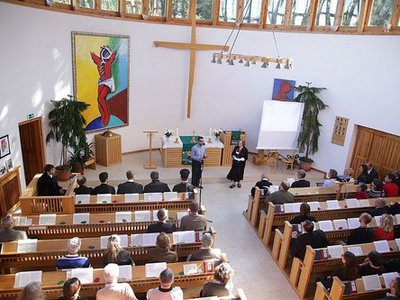
The 13th Synod Cycle’s 15th Synod Meeting of the Reformed Church in Hungary took place last week on 12th – 13th of November 2014. It was the last Synod of a 6-year-Cycle and the last before elections of new officials.
The European Christian Environmental Network (ECEN) 10th Assembly held on 27th September to 1st October at the Soli Deo Gloria Reformed Conference Centre in Balatonszárszó themed ‘Energy and Climate Change – the Churches’ Role and Voice’.
In 2017, Reformed churches around the world will celebrate the 500th anniversary of the Reformation, and in Hungary preparation for the jubilee year has already begun.
Nurturing future generations of pastors is an important task for any church denomination. In the RCH, one way this is realized is through a scholarship program where students have the opportunity to study abroad for a year.
2014 is a special year of Reformed remembrance. This year we celebrate several anniversaries related to many well-known Swiss reformers’ lives. Some of the things we remember about the scientists who contributed to the Hungarian awareness to the works of the "fathers of the faith."
This year is marked by the election of new officials in our church, due to the fact that on 31st December 2014 the six-year mandates of all elected presbytery, church district and Synod officers will expire. We have collected the deadlines, set by the election law, and summed up the agenda in connection to the elections.
The Teach Overseas program has been sending native English speakers to Hungary for more than 20 years. Most recently this connection has been manifested through the organization’s relationship with the Refugee Ministry of the Reformed Church in Hungary.
The number of matriculated students at Károli Gáspár University of the Reformed Church in Hungary increased again. The institution has expanded and is now waiting to welcome students in September with a new building. Rector Péter Balla also told us if he would be applying for the church elections this autumn.
The president and secretary of the European Area of the World Communion of Reformed Churches have issued a letter expressing WCRC's solidarity for the Reformed Church in Sub-Carpathia and the Hungarian minority living in Ukraine as they face the uncertain situation in Ukraine.
Maria Kojdecka came to Budapest as a volunteer with no real plan of where she would work. All she knew was that she wanted to teach and wanted an adventure. She found herself at the community center of the Reformed Church in Hungary’s Refugee Ministry.
The effects of the consistently escalating political situation in Ukraine since the autumn of 2013 are becoming more and more noticeable in the average household. Day by day the crisis can be felt not only in the crisis regions but also in Sub-Carpathia, within the Hungarian minority.
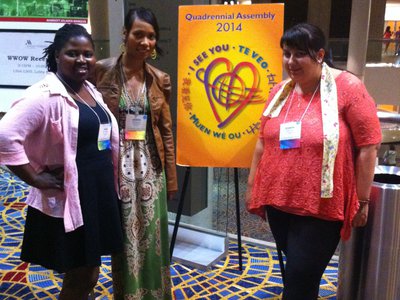
Quadrennial Assembly took place from 25 to 29 June in Atlanta, GA, where international guests were invited from 18 countries, which meant around 25 partner churches and organizations were present. Among the international sisters was RCH delegate, Szabina Sztojka.
At first glance, the connection between Hungary and Korea may seem distant if not all together non-existent. However, the historical parallel between the Korean and Hungarian people has become a solid foundation for cooperation among churches.
The leadership of the Reformed Church in Sub-Carpathia (RCSC) has issued a statement of peace, protesting any form of violence and war, and striving instead for the peaceful co-existence of all nations living in Ukraine.
Leaders of Transcarpathia have provided guarantees for ensuring the safety of the ethnic Hungarian minority and the county's stability, Hungarian Human Resources Minister Zoltan Balog said after talks on Friday.